
Yiddish dictionaries in PDF format offer accessible language resources, bridging historical linguistics with modern digital convenience for learners and researchers alike.
The Growing Demand for Digital Yiddish Resources
Digital Yiddish resources, including PDF dictionaries, are experiencing increased demand due to growing interest in genealogy, cultural heritage, and linguistic studies. The portability and searchability of PDF formats make them invaluable tools. Accessibility is key, as these resources overcome geographical barriers, connecting learners globally. Furthermore, preservation efforts benefit from digital archiving, safeguarding Yiddish vocabulary for future generations.
Why Use a Yiddish Dictionary in PDF Format?
PDF Yiddish dictionaries combine the depth of traditional lexicography with the convenience of digital access, offering a practical and efficient learning experience.
Portability and Accessibility
Yiddish dictionary PDFs excel in portability; easily stored on devices, they accompany learners anywhere with an internet connection or not. This accessibility removes geographical barriers to language study. Researchers and enthusiasts benefit from having comprehensive lexical resources readily available, fostering consistent engagement with the Yiddish language. PDFs facilitate convenient study during travel, at libraries, or simply at home, promoting flexible learning schedules and deeper linguistic exploration.
Offline Access and Preservation
Yiddish dictionary PDFs guarantee offline access, crucial when internet connectivity is limited or unavailable – a significant advantage for travelers or those in remote areas. Furthermore, PDFs contribute to the preservation of Yiddish lexicography. Digitization safeguards these valuable resources against physical deterioration, ensuring their longevity and continued availability for future generations of scholars and language learners. This digital archiving is vital for a language with a rich, yet vulnerable, history.

Popular Yiddish Dictionaries Available as PDFs
Notable Yiddish-English dictionaries, like those by Harkavy, Lewin, and Beinfeld, are increasingly available in PDF format, offering comprehensive linguistic tools digitally.
The Comprehensive Yiddish-English Dictionary by Alexander Harkavy
Alexander Harkavy’s dictionary, a monumental work, remains a cornerstone for Yiddish-English translation. Its PDF availability provides researchers with a vast lexicon, encompassing numerous terms and nuanced definitions.
This resource is particularly valuable for historical linguistics, showcasing Yiddish vocabulary evolution. However, its age means some contemporary terms may be absent. The PDF format allows for easy searching and cross-referencing, making it a powerful tool despite its limitations, and is often found in digital archives.
The Yiddish Dictionary of Isaac Lewin
Isaac Lewin’s Yiddish dictionary, available as a PDF, is celebrated for its detailed etymological information and focus on the historical development of Yiddish words. It’s a valuable resource for understanding the origins and connections within the language.
The PDF format facilitates easy navigation through its extensive entries. While perhaps not as comprehensive as Harkavy’s, Lewin’s work offers unique insights, particularly for those tracing the roots of Yiddish vocabulary and its relationship to other languages.
The New Yiddish-English Dictionary by Solon Beinfeld
Solon Beinfeld’s “The New Yiddish-English Dictionary,” often found as a PDF, represents a more contemporary approach to Yiddish lexicography. It includes modern usages and reflects the evolving nature of the language, offering definitions for newer terms.
This PDF version is particularly useful for learners encountering contemporary Yiddish texts. Beinfeld’s dictionary balances thoroughness with accessibility, making it a practical choice for both students and seasoned Yiddish speakers.
Features to Look for in a Yiddish Dictionary PDF
Essential features include robust transliteration, detailed grammatical notes, and comprehensive coverage of both historical and contemporary Yiddish vocabulary within the PDF.
Transliteration Systems (Romanization)
Effective Yiddish dictionaries utilize clear Romanization systems, crucial for readers unfamiliar with the Hebrew alphabet. Different systems—like YIVO, Harvard, or even variations—exist, so a dictionary’s chosen method should be explicitly stated. Consistency is paramount; a well-defined system allows accurate pronunciation and searching.
Understanding the transliteration key is vital, as it bridges the gap between the Yiddish script and Roman characters, enabling users to navigate and utilize the dictionary effectively.
Grammatical Information and Usage Examples
Superior Yiddish dictionaries extend beyond simple word translations, providing essential grammatical details like gender, number, and declension patterns. Crucially, they include contextual usage examples—sentences demonstrating how words function in real-world communication. These examples illuminate nuances often lost in direct translation.
Such features are invaluable for learners aiming for fluency, fostering a deeper understanding of Yiddish’s grammatical structure and practical application.
Coverage of Historical and Contemporary Yiddish
Comprehensive Yiddish dictionaries in PDF format ideally span the language’s evolution, encompassing both historical and contemporary vocabulary. Older terms, reflecting Yiddish’s roots and development, are vital for understanding texts from different eras. Modern additions showcase the language’s continued vitality.
A robust dictionary acknowledges regional variations and evolving slang, offering a complete linguistic picture.

Free vs. Paid Yiddish Dictionary PDFs
Yiddish dictionary PDFs range from freely available online resources to more extensive, professionally compiled paid versions, each offering unique benefits to users.
Advantages of Free Online Resources
Free Yiddish dictionary PDFs provide immediate access for beginners and casual learners, eliminating financial barriers to entry. These resources often offer a substantial core vocabulary and basic definitions, sufficient for initial exploration.
Furthermore, many free options are easily searchable and readily available through online archives and digital libraries. While potentially lacking the depth of paid dictionaries, they serve as excellent starting points for language study and genealogical research, offering convenience and broad accessibility.
Benefits of Investing in a Paid Dictionary
Paid Yiddish dictionary PDFs typically offer significantly greater depth and breadth of vocabulary, including historical terms and nuanced definitions. They often incorporate detailed grammatical information, usage examples, and transliteration systems for accurate pronunciation.
Investing in a premium resource ensures access to a meticulously researched and curated lexicon, frequently exceeding the scope of free alternatives. This enhanced detail is invaluable for serious scholars, translators, and dedicated language learners seeking comprehensive linguistic understanding.
Navigating and Utilizing a Yiddish Dictionary PDF
Effective PDF navigation relies on utilizing search functions and understanding dictionary abbreviations; these tools unlock rapid access to Yiddish definitions and linguistic insights.
Using Search Functions Effectively
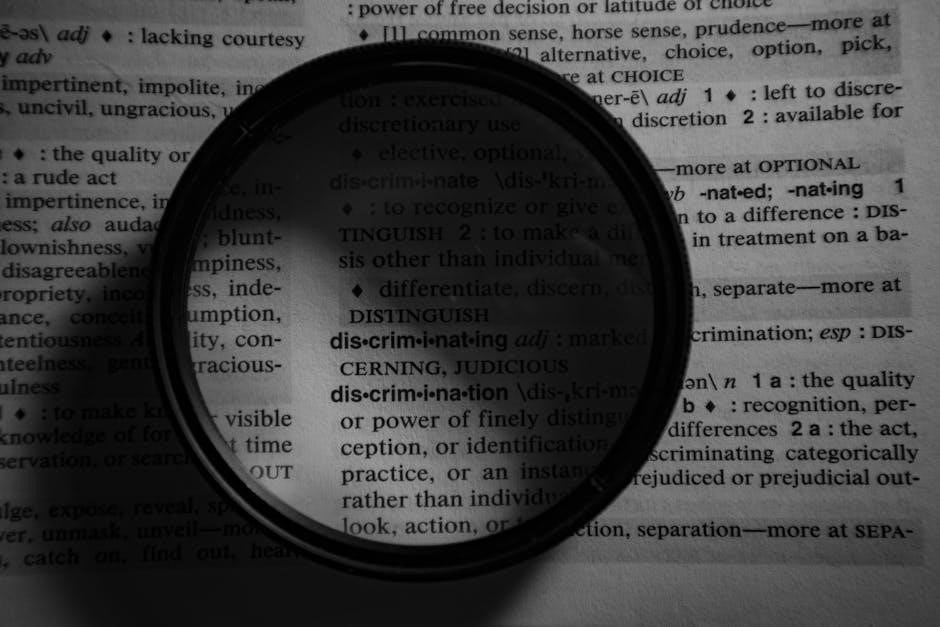
Mastering the search function within your Yiddish dictionary PDF is crucial. Utilize both Yiddish and transliterated terms for comprehensive results. Experiment with wildcard characters – like an asterisk (*) – to find variations of a root word.
Remember that Yiddish orthography can vary; searching multiple spellings increases accuracy. PDF readers often offer advanced search options, such as case sensitivity and whole-word matching, further refining your queries for optimal dictionary use.
Understanding Dictionary Abbreviations and Symbols
Yiddish dictionary PDFs frequently employ abbreviations for grammatical categories – like ‘n.’ for noun or ‘v.’ for verb – and symbols denoting phonetic transcriptions. Deciphering these is vital for accurate interpretation.
Pay close attention to symbols indicating dialectal variations or historical usage. A key or legend within the PDF will usually explain these conventions, unlocking a deeper understanding of each entry’s nuances and context.
Resources for Finding Yiddish Dictionary PDFs
Online archives and digital libraries, alongside university repositories, provide access to a wealth of digitized Yiddish dictionary PDFs for research.
Online Archives and Digital Libraries
Numerous online platforms diligently preserve and offer Yiddish dictionary PDFs. The Internet Archive, a cornerstone for digitized texts, frequently hosts scanned versions of older lexicons. Additionally, sites like HathiTrust Digital Library and Google Books can yield valuable results, though access may vary. These resources often contain historical dictionaries, providing insight into evolving language usage and offering a glimpse into past linguistic landscapes. Careful searching, utilizing keywords like “Yiddish-English dictionary PDF,” is crucial for successful discovery.
University and Institutional Repositories
Academic institutions often maintain digital repositories containing Yiddish dictionary PDFs. Universities with strong Judaic Studies programs, like Harvard and Yale, frequently digitize and make available rare linguistic materials. Checking the online catalogs and digital collections of these institutions can uncover specialized dictionaries or scholarly annotations. Furthermore, libraries associated with Yiddish cultural organizations may host digitized versions of important lexicons, offering unique research opportunities.
The Importance of Context in Yiddish Translation
Yiddish dictionary PDFs are valuable, but understanding regional dialects and historical vocabulary shifts is crucial for accurate translation and nuanced interpretation.
Regional Variations and Dialects
Yiddish dictionary PDFs often reflect a dominant dialect, typically Ashkenazi. However, Yiddish exhibits significant regional variations – Litvish, Polnish, and Ukrainian influences impact vocabulary. A PDF might not fully capture these nuances.
Consider that a word’s meaning can shift dramatically based on geographic origin. Therefore, supplementing a Yiddish dictionary PDF with knowledge of dialectal differences is essential for precise understanding and avoiding misinterpretations when translating texts or engaging with spoken Yiddish.
Historical Changes in Yiddish Vocabulary
Yiddish dictionary PDFs represent a snapshot in time; the language has evolved considerably. Older dictionaries may lack contemporary terms or present archaic definitions. Conversely, newer PDFs might omit historical vocabulary.
Understanding this evolution is crucial. A comprehensive approach involves consulting multiple Yiddish dictionary PDFs spanning different publication dates to trace word origins, shifts in meaning, and the impact of historical events on the lexicon, ensuring accurate interpretation.

Tools to Complement Your Yiddish Dictionary PDF
Yiddish dictionary PDFs benefit from pairing with online translators and language learning platforms, enhancing comprehension and providing contextual usage examples.
Online Yiddish Translators
Online Yiddish translators serve as valuable companions to PDF dictionaries, offering quick translations of individual words or phrases. However, remember these tools aren’t always nuanced; they may struggle with idiomatic expressions or contextual subtleties. Use them to supplement, not replace, a comprehensive dictionary. Several websites provide basic Yiddish-English translation, but accuracy varies significantly. Always cross-reference with your PDF dictionary for verification and a deeper understanding of meaning, especially considering regional variations.
Yiddish Language Learning Websites and Apps
Yiddish learning platforms often integrate dictionary functions, providing contextual examples alongside definitions – complementing your PDF resource. These interactive tools can aid pronunciation and grammar comprehension, enhancing vocabulary acquisition. While not replacements for detailed PDF dictionaries, they offer dynamic learning experiences. Explore options like Duolingo (limited Yiddish course) and dedicated Yiddish learning sites. Remember to utilize your PDF dictionary to confirm nuances and expand beyond app-provided content for a richer understanding.

Copyright and Legal Considerations for Yiddish Dictionary PDFs
PDF dictionaries may fall under public domain or retain copyright; understanding usage rights is crucial for legal and ethical access to these valuable resources.
Public Domain Status and Usage Rights
Many older Yiddish dictionary PDFs are now in the public domain, meaning they are free to use, copy, and distribute without permission. However, determining public domain status requires careful consideration of publication dates and copyright laws.
Even with public domain works, acknowledging the original source is good practice. More recent dictionaries, or digitized versions with new annotations, likely retain copyright, necessitating adherence to licensing terms and restrictions regarding reproduction or commercial use. Respecting intellectual property is paramount.
Respecting Intellectual Property
When utilizing Yiddish dictionary PDFs, particularly those not explicitly in the public domain, it’s crucial to respect copyright. This includes refraining from unauthorized reproduction, distribution, or modification of the material.
Always check the licensing terms accompanying the PDF. Proper attribution to the author and publisher is essential, even for permitted uses. Supporting lexicographers and publishers ensures continued development of valuable Yiddish language resources.

Future Trends in Digital Yiddish Lexicography
Yiddish dictionary PDFs are evolving towards interactive platforms and crowdsourced lexicon development, enhancing accessibility and reflecting the language’s dynamic nature.
Interactive Yiddish Dictionaries
Future Yiddish dictionaries, beyond static PDFs, will likely feature dynamic interfaces. Imagine clickable words revealing etymological roots, audio pronunciations, and contextual usage examples. These digital tools could incorporate user contributions, fostering a collaborative learning environment. Hyperlinking to related terms and grammatical explanations will enhance comprehension. Such interactive formats promise a more engaging and effective way to explore the richness of the Yiddish language, moving beyond traditional lookup methods.
Crowdsourced Yiddish Lexicon Development
PDF dictionaries, while valuable, can’t capture Yiddish’s evolving nature. A promising trend is crowdsourced lexicon development – online platforms allowing users to contribute definitions, usages, and regional variations. This collaborative approach, supplementing existing PDF resources, ensures a more comprehensive and up-to-date Yiddish lexicon. Such projects harness collective knowledge, vital for preserving and expanding this vibrant, yet vulnerable, language, going beyond static PDF limitations.
Yiddish dictionary PDFs democratize access to linguistic tools, fostering language revitalization and empowering learners through portable, readily available resources for study and research.
The Role of Dictionaries in Language Revitalization
Yiddish dictionary PDFs are crucial for revitalization efforts, preserving vocabulary and grammatical structures facing decline. Digital formats increase accessibility, enabling wider study and use of the language. These resources empower learners to connect with Yiddish heritage, fostering a renewed interest in its rich cultural history.
By providing comprehensive linguistic data, these PDFs support both academic research and everyday language practice, contributing significantly to Yiddish’s continued survival and growth.